Why It Matters
This isn't a trivial question. The difference between indoor and outdoor padel affects how you play, how much you pay, and how reliably you can get a game. If you're in Cape Town with year-round sunshine, the calculation is different than if you're in Manchester dealing with six months of grey drizzle.
Most regular players end up forming a preference, and many use a mix of both depending on the season. What follows is a practical breakdown across the things that actually matter.
Playing Conditions
Indoor courts give you a controlled environment. No wind, no rain, no sun in your eyes. The temperature stays stable, the lighting is even, and the ball behaves the same way at 9am and 9pm. For match play and technical practice, this consistency is hard to beat.
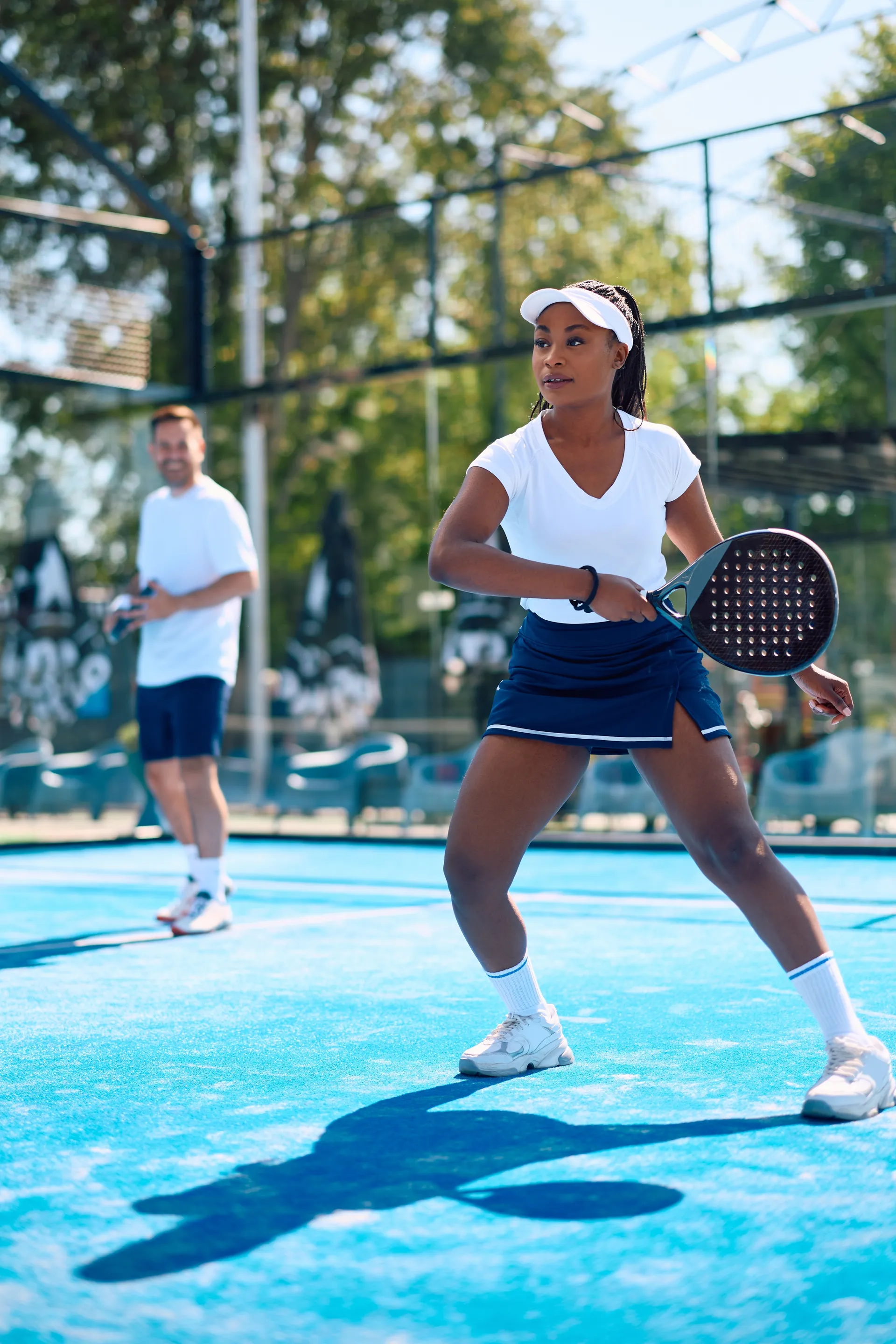
Outdoor courts introduce variables that change how you play. Wind is the big one — it affects lobs, smashes, and bandeja shots in ways that force you to adjust mid-rally. Sun position creates glare at certain times of day. Even temperature matters: a cold ball bounces lower, which changes the rhythm of the game.
Some players find outdoor conditions annoying. Others argue they make you a more complete player. There's truth in both positions.
Court Surfaces and Ball Behaviour
Indoor courts typically use well-maintained artificial turf with consistent sand infill. The surface plays fast and true. Glass walls stay at a stable temperature, so ball rebound off the walls is predictable.
Outdoor turf takes more punishment from the elements. Morning dew or overnight rain can make the surface damp and slightly slower until the sun dries it. In hot weather, the turf firms up and the game speeds up. Glass walls absorb ambient temperature — cold glass deadens the ball on contact; hot glass can make it livelier.
A well-maintained outdoor court is perfectly good to play on. But the consistency simply isn't there in the way it is indoors, and on a bad day the difference is obvious.
Cost Comparison
Outdoor courts are cheaper — typically 20 to 30 percent less than indoor at the same club. The numbers:
In the UK, outdoor courts generally run 20 to 40 GBP per hour. Indoor courts: 30 to 60 GBP. In South Africa, outdoor is R100 to R250; indoor is R200 to R350.
The gap reflects the real cost of running an indoor facility: climate control, enhanced lighting, and building maintenance all add up. Over a year of regular play, the difference between always playing indoor and always playing outdoor is meaningful — potentially hundreds of pounds or thousands of rand.
Seasonal Factors
In England, this is where indoor courts justify their existence. From roughly November to March, daylight hours are short, temperatures drop, and rain is frequent. Playing outdoors in January in London isn't impossible — some clubs have floodlights — but it's cold, often wet, and unpopular for good reason. Winter padel in the UK is overwhelmingly an indoor affair.
South Africa's situation is more nuanced. Cape Town's summers are excellent for outdoor play. The winter brings rain, and the wind can be a factor in any season — the south-easter regularly makes outdoor padel unpleasant from October to February, which is ironic timing given it's otherwise the best weather. Joburg has a different pattern: mild winters are fine for outdoor play, but afternoon thunderstorms in summer make indoor courts the safer bet for late-day bookings.
Health and Safety
Indoor courts remove weather-related risks: no slipping on wet turf, no heat exhaustion, no lightning. Some indoor facilities have poor ventilation, which can make intense sessions uncomfortable, but this is a facility problem rather than an inherent issue.
Outdoor play means fresh air and daylight, which most people prefer when conditions are good. In South Africa, UV protection is a genuine concern — wear sunscreen and a cap. In either country, avoid playing on visibly wet outdoor surfaces. It's not worth the fall.
So Which Is Better?
If you can only choose one: indoor in the UK, outdoor in South Africa. The climate makes the decision for you in most cases.
But most regular players don't choose just one. The sensible approach is to play outdoors when conditions are good — cheaper, more pleasant, better atmosphere — and move inside when the weather or time of year demands it. In practice, this means a seasonal split: outdoor in summer, indoor in winter. In South Africa, it might mean booking indoor when the wind forecast looks grim.
If you're playing competitively or working on specific technical skills, indoor courts offer consistency that's hard to replicate outside. If you're playing social padel with mates and budget matters, outdoor is the way to go.
Find the Right Courts
Frequently Asked Questions
Is indoor padel better than outdoor?
Neither is inherently better. Indoor gives you reliable conditions and weather protection. Outdoor is cheaper and more social. Most regular players use both depending on the season and situation.
Are indoor padel courts faster than outdoor?
Typically yes. The controlled surface and stable temperature keep the turf and glass consistent, which usually results in a faster game. Outdoor courts vary — they can be slow when damp or fast in extreme heat.
Can you play padel outdoors in winter in England?
Technically yes, if the club has floodlights and the weather cooperates. In practice, most winter padel in England happens indoors. Short days, cold temperatures, and frequent rain make outdoor play unreliable from November through March.
Do professional padel tournaments use indoor or outdoor courts?
Both. The Premier Padel tour and World Padel Tour have used indoor arenas in cities like Madrid and Milan, and outdoor venues in warmer locations. The biggest showcase events tend to be indoors for broadcast and crowd comfort.
The Social Side
Outdoor clubs tend to feel more relaxed. There's often a terrace or bar area where people hang around after matches, and the open-air setting lends itself to a community feel. You can watch other games, chat between sets, and it's easier for spectators to follow the action.
Indoor clubs are usually more focused. The enclosed environment can feel more serious, which suits competitive players but can be less welcoming for casual newcomers. That said, many of the best indoor facilities have put real thought into their social spaces — lounges, viewing areas, smoothie bars — specifically to counter that perception.
If the social side matters to you, visit a club before committing. The vibe varies more between individual clubs than between indoor and outdoor as categories.