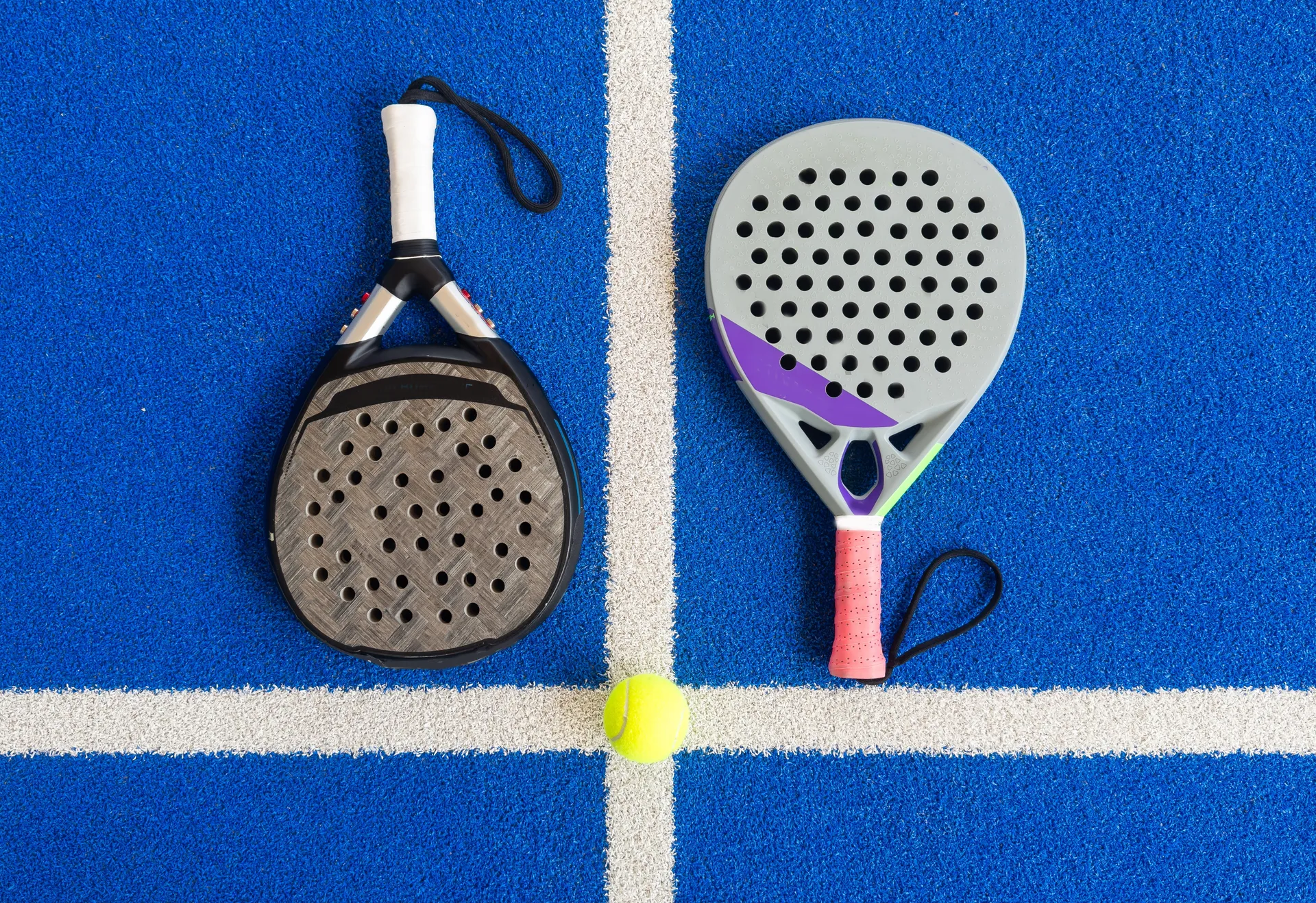
What to Look for in a Beginner Racket
Three things matter. Shape: get a round racket. Round rackets have the biggest sweet spot and the most centred balance, which means more forgiveness when your timing is off. Weight: stay between 340 and 370 grams. Much lighter and you lose stability; much heavier and your arm tires before your game does. Core: look for soft or medium EVA foam, which absorbs vibration and feels comfortable on impact.
Avoid diamond-shaped rackets. They're designed for power players who hit the centre of the racket consistently — a skill that takes time to develop. A diamond shape in a beginner's hands just means more mishits and a sore arm.
The brand matters less than people think. A 60 GBP round racket from Head will serve you better than a 150 GBP diamond racket from the same brand.
How We Evaluate Rackets
We look at five things: control (can a beginner place shots with it), comfort (does it absorb vibration well enough for someone who's still learning to hit cleanly), sweet spot size (how much does it punish off-centre hits), manoeuvrability (can a new player react at the net), and value for money.
A note on honesty: we haven't run lab tests on these rackets. Our assessments are based on personal use, feedback from coaches and club players, and the general consensus among the UK padel community. If you disagree with a recommendation, that's fine — racket preference is partly subjective, especially at the beginner level where the differences between options are relatively small.
Our Top Picks
Varlion Bourne Summum Prisma
Varlion · 55 - 70 GBP · 355 - 370g · Round
A textbook beginner racket. Round shape, soft EVA core, generous sweet spot. It absorbs vibration well enough that your arm won't complain after a long session, and the balanced weight means it works at the net and from the back. Nothing flashy, but it does everything a new player needs and won't hold you back as you improve over your first six months.
Head Flash Pro
Head · 45 - 60 GBP · 350 - 365g · Round
The best value option on this list. Head's Graphene Touch construction keeps the feel comfortable on impact without driving the price up. It's light, easy to swing, and forgiving when you don't hit the centre — which, if you're honest, will happen a lot early on. At under 60 GBP, there's very little risk in starting here.
Bullpadel Vertex 03 Comfort
Bullpadel · 70 - 90 GBP · 360 - 375g · Round
Worth considering if you have any history of elbow or wrist issues. The Vertex 03 Comfort is built specifically to dampen vibrations — the CurBoTech frame and Multieva core make it noticeably softer on contact than most rackets in this price range. It's slightly heavier than the others here, which gives it decent power from the baseline. The trade-off is a fraction less manoeuvrability at the net, but for a beginner that's barely noticeable.
Adidas Metalbone Lite 3.3
Adidas · 60 - 80 GBP · 345 - 360g · Round / Teardrop
This sits at the boundary between beginner and intermediate. The hybrid shape — somewhere between round and teardrop — pushes the sweet spot slightly higher than a pure round racket. The result is a bit more power, which suits players who already have racquet sport instincts and want a racket they won't outgrow in three months. Lighter than average, well-built, and one of the better-looking options if that matters to you.
Nox ML10 Pro Cup
Nox · 50 - 65 GBP · 355 - 370g · Round
The ML10 has been a staple recommendation for beginners for years, and for good reason. It doesn't excel in any single area but it doesn't fall short anywhere either. Round shape, medium weight, fiberglass face, balanced feel. It's widely stocked in the UK, the price is reasonable, and it has a long track record of positive reviews. A safe pick if you want reliability over novelty.
Quick Comparison
| Racket | Price | Best For |
|---|---|---|
| Varlion Bourne Summum Prisma | 55 - 70 GBP | All-round control and comfort |
| Head Flash Pro | 45 - 60 GBP | Budget-friendly control |
| Bullpadel Vertex 03 Comfort | 70 - 90 GBP | Comfort and arm protection |
| Adidas Metalbone Lite 3.3 | 60 - 80 GBP | Players coming from tennis |
| Nox ML10 Pro Cup | 50 - 65 GBP | Versatile all-round play |
Looking After Your Racket
Store it in a padel bag, not loose in the boot of your car. Heat degrades the foam core over time — leaving a racket in a hot car for a few hours won't destroy it, but doing it repeatedly will shorten its lifespan. Cold makes the frame more brittle.
Replace the grip wrap when it starts feeling slick. That's usually every 15 to 20 hours of play, though sweaty players may need to change it sooner. A frame protector strip is worth the small cost — wall contact is inevitable in padel, and it's the leading cause of cosmetic damage.
With reasonable care, expect 12 to 18 months from a beginner racket before the core starts losing its responsiveness. By then you'll probably be ready for something different anyway.
Find a Club to Play
Frequently Asked Questions
What shape padel racket is best for beginners?
Round. It has the largest sweet spot and most forgiving balance. This isn't a close call — round is the right shape for anyone still developing their technique.
How much should I spend on my first padel racket?
Between 45 and 90 GBP gets you a genuine quality racket. Below 30 GBP the build quality drops off sharply. Above 100 GBP you're paying for features that won't benefit you until your game improves.
Can I use a tennis racket for padel?
No. Padel rackets are solid — no strings — and shorter than tennis rackets. They're a different piece of equipment entirely. You can't use one for the other, and organised play wouldn't allow it.
How heavy should a beginner padel racket be?
Between 340 and 370 grams. Most beginners do well in the 350 to 365 range. Lighter means more manoeuvrability but less stability. Heavier gives you more power but tires your arm faster. Pick what feels comfortable when you swing it, not what the spec sheet suggests.